Ask Ella: Can I take the morning after pill during perimenopause?
As you hit your 40s and 50s, your body begins the transition into menopause, a phase called perimenopause. You may notice irregular periods, hot flushes, and uncertainty about your fertility. It’s easy to think you no longer need contraception. But until you’ve fully reached menopause, you can still get pregnant. If you’ve had unprotected sex and are concerned, we’re here to offer clear, reassuring guidance to help you feel confident and supported.
Are you still fertile during perimenopause?
You’re still fertile until you’ve officially reached menopause. During perimenopause, your periods become unpredictable, sometimes lighter, heavier, or even skipped. But ovulation can still happen. Medically, menopause is only defined as 12 months without a period. So, if you’ve had a period in the past year, you’re still considered fertile and should use contraception.
Irregular cycles and emergency contraception timing
If your cycle is irregular during perimenopause, it’s difficult to know when (or if) you ovulated. As you can’t rely on your last period to estimate ovulation, it’s important to make sure that you use your preferred form of regular contraception throughout your cycle. If you experience contraceptive failure or unprotective sex, you should use an emergency contraceptive such as ellaOne®. ellaOne® can work for up to 5 days (120 hours) after sex, giving you a bit more time if you need it.
Is ellaOne® effective?
ellaOne® is an effective form of emergency contraception for women and people with uteruses of any reproductive age, including those in perimenopause. Its active ingredient, ulipristal acetate, works by delaying or preventing ovulation, the same way it works for younger women.
HRT and emergency contraception: what your pharmacist needs to know
If you’re on medication like hormone replacement therapy (HRT), you must tell the pharmacist when requesting ellaOne®. While HRT itself is not a barrier to taking ellaOne®, some forms of HRT contain progesterone, which can lower the effectiveness of ulipristal acetate.
Understanding HRT with progesterone
Progesterone is included in HRT for any women with a uterus to protect the lining from oestrogen -related thickening, which increases cancer risk. It comes in several forms:
- Combined HRT tablets: daily tablets with both oestrogen and progestogen
- Separate progesterone tablets or capsules: taken alongside oestrogen gels, patches, or sprays. Common examples include micronised “body-identical” progesterone
- Combined HRT patches: patches that deliver both oestrogen and progestogen (eg: norethisterone or levonorgestrel)
- Intrauterine System (IUS or hormonal coil): devices that release progestogen directly into the womb and can be used as part of HRT
Summary
Even during perimenopause, it’s still possible to get pregnant, so emergency contraception may be needed if you experience contraceptive failure or have unprotected sex. With ellaOne®, you have an option, and its effectiveness isn’t affected by age. A quick chat with your pharmacist ensures it can be safely used alongside any medication, including HRT.
FAQ
1. How long do I need contraception after my periods stop?
If you are over 50, continue using contraception until you’ve gone 12 consecutive months without a period. If you are under 50, continue until 24 consecutive months without a period.
2. Does the morning after pill affect my perimenopause symptoms?
The morning after pill is a single, high dose of hormone taken quickly. While it may temporarily change your next cycle (making it early, late, lighter, or heavier), it should not have a long-term impact on your overall perimenopause symptoms.
3. Is the pill less effective because of my age or weight?
ellaOne® (ulipristal acetate) stays highly effective no matter your age, making it a reliable choice for emergency contraception for everyone.
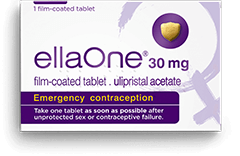

ellaOne® 30mg film-coated tablet contains ulipristal acetate and is indicated for emergency contraception within 120 hours (5 days) of unprotected sexual intercourse or contraceptive failure.
*Based on sales data. Verify at ellaone.co.uk/verify
Always read the instructions on the package leaflet carefully. Health information within this website is provided for educational purposes only and is not intended to replace discussions with healthcare professionals. All decisions regarding patient care must be made with a healthcare professional considering the unique characteristics of the patient.