
What they didn’t teach us in school… PT 1
Using case studies from our recent survey to break down what these numbers really mean.
Contraception, stigma and embarrassment.
This summer we partnered with Brook, the UK’s leading sexual health charity, to deliver grassroots education to today’s youth. Learn all about our partnership here.
To coincide with this, we carried out a survey of 2001 sexually active 16-24 year olds, asking about a wide range of topics including unprotected sex, where they get their sex education and their experiences with contraception.
At the same time, we asked participants to share their raw, real and uncensored stories of contraceptive failures, misunderstandings and the stigma around contraception.
The responses have been pretty surprising. Let’s take a look at some of the most significant stats from our study, and how they translate into real-life experiences via our anonymised case studies.
We know that there are many different forms of contraception methods, and none of them are a one-size-fits-all solution. Sometimes we may need to try a few different methods until we get that Cinderella moment. Whether it’s condoms, the pill or the implant, there’s a lot to choose from, and what works best for you may be someone else’s worst nightmare. But how many of you actually know how your contraceptive method works…?
Well, if you’ve ever been left feeling a bit overwhelmed by contraception, you’re not alone. 50% of participants said they have felt confused by the different contraceptive methods available to them. Additionally, nearly half of our participants (47%) said they have used a contraceptive method without fully understanding how it works! And this is further exemplified by some of our case studies:
“Currently on a hormonal contraception that I couldn’t describe how it works. I’ve been on it for several years but I don’t understand it.
I was able to be pulled out of sex ed completely, which I now believe to be wrong – I only found out a few weeks ago that women can only get pregnant while ovulating. I missed sex ed in primary and secondary school but had one class about contraception in my Catholic secondary school when I was about 16, during which I was taught about different forms of contraception but then reminded at the end that ‘abstinence is the only form of contraception God supports.’”
Anon
Ovulation typically lasts around one day, and this is when women and people with uteruses are most fertile. However, you can still get pregnant in the days leading up to and after. This is known as your fertile window.
“I have felt confused and asked for the morning after pill via an online doctor at a pretty old age (19 or so) when I had missed a birth control pill.
I had to be advised that missing one pill doesn’t mean you are unprotected, and still struggle to understand how the pill works in this sense. My partners have also been very uneducated in female contraception, despite us both relying on it.”
Anon
FYI, this depends on which birth control pill you’re currently taking. Check in with your GP or a healthcare professional to find out the window for a missed pill and how it may affect your protection.
At ellaOne, we work hard to destigmatise emergency contraception. Why should you be ashamed of taking control of your future? However, this is still a stigma that so many women and people with uteruses are facing every day!
Our survey showed that 68% believe there is a stigma attached to taking the morning after pill. A high, yet unsurprising, percentage.
What’s even more worrying is that this can result in people delaying or avoiding accessing emergency contraception when they may need it. 20% have delayed or avoided accessing emergency contraception due to stigma or fear of judgment, and 23% have delayed or avoided accessing emergency contraception due to feeling awkward or embarrassed about asking for it.
We understand that not everyone feels comfortable asking for emergency contraception, and we won’t judge you for that! You should not be ashamed or made to feel uncomfortable about accessing emergency contraception. To that end, ellaOne is available to purchase online at ellaOne direct LINK, with free, discreet, next-day delivery – for those moments you don’t have the time, or maybe just don’t fancy going to the pharmacy.
If you’ve ever felt embarrassed or nervous about accessing emergency contraception, you’re not alone:
“Had unprotected sex and I thought I was pregnant but I felt embarrassed asking for [the] morning after pill because of the fear of being judged, moreover I am not even sure how it works.”
Anon
“I have a broken condom which caused me fear however I felt super embarrassed to go to the pharmacy because of fear of judgement”
Anon
“Had unprotected sex where my partner ejaculated in me. I was 16, and had to go to the pharmacy to get the morning after pill. I felt embarrassed and awkward about it, and I feel that if I wasn’t brave enough to let my parents know so they could take me, I might have ended up with an unwanted pregnancy.
I feel that it is important to end any stigma around emergency contraception as accidents happen and sometimes people having sex are worried that they will get in trouble or be judged.”
Anon
“I have definitely had fear of judgement about the morning after pill”
Anon
“The first time I had to get the emergency pill I was not sure how to ask for it because I felt quite uncomfortable and nervous. I was by myself as my partner couldn’t be there so it felt a bit awkward.”
Anon
“When I was 17 I delayed getting the morning after pill because I was embarrassed.
I didn’t have the money for it so I had to ask others for help.
I wasn’t old enough nor in a good place or position to keep a baby so I had to go and ask the staff that worked at the shelter I lived in at the time.
It was completely embarrassing to me because sex and things along those lines have always been very awkward conversations for me. … I felt ashamed of myself after the fact for even letting it happen without using contraception, especially when I knew the risks.”
Anon
“I have had to take the morning after pill many times and I feel so embarrassed doing it. There’s definitely a stigma there that has prevented me from getting it even when I have needed it.”
Anon
Unfortunately, this fear of awkwardness or embarrassment is not limited just to emergency contraception. 46% of our participants have delayed accessing a method of contraception, due to feeling awkward asking for it:
“I have been embarrassed to ask for contraception and I had to wait until I needed it for medical reasons (very intense bleeding, PMS, and pain) to get it.”
Anon
Be sure to speak to your GP or a healthcare professional if you experience intense bleeding, PMS, or extreme pain while on your period, so that they can advise on the best treatment.
“I avoided getting contraception because I was worried about the side effects, was scared that I would change drastically if I took it, and was also too embarrassed to ask.”
Anon
“Started having sex at 15 and definitely felt ashamed to buy condoms and so bought online but it was embarrassing.”
Anon
And we wish it stopped there. Stigma and embarrassment don’t end with contraception. People of any gender still experience this in so many aspects of sexual health, whether that means buying pregnancy tests, checking for STIs or even going for a smear test. It can feel a bit unnatural or even embarrassing to ask for help when it comes to more personal topics. You’re not the only one who can feel this way:
“I was too scared to even buy a pregnancy test but thought I was pregnant for around a month. However, I was a virgin.”
Anon
“I think everyone has had a situation where their sex partner doesn’t want to use contraception. It’s much tougher on women and guys just don’t get that.
There’s also a lot of risk if you’re queer and it can be even harder asking for help in that instance as most people aren’t as informed.
I always feel ashamed to check myself for STIs or UTIs as it’s something very private and embarrassing even when I know I’m at risk.
It would be nice if there was an indirect way to access contraception and other preventatives or have them more readily available so there isn’t as much stigma.”
Anon
All these case studies are from real people sharing their true experiences, and we have anonymised their names to protect their identity.
Have you got a story to share? Maybe a bit of an awkward moment accessing emergency contraception? Or a positive experience that made you feel empowered? We want to hear it! Your stories, no matter the content, no matter where you’re based, how old you are or the circumstances surrounding it, can help tackle the stigma around emergency contraception.
Keep your eyes peeled for part two, where we continue to look at how our survey statistics translate into real-life tales. We’ll be diving into sex education, miseducation and unplanned pregnancy. See you there.
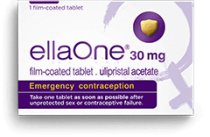
ellaOne® 30mg film-coated tablet contains ulipristal acetate and is indicated for emergency contraception within 120 hours (5 days) of unprotected sexual intercourse or contraceptive failure. Always read the label.
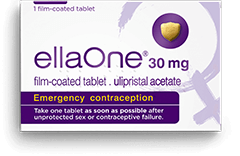

ellaOne® 30mg film-coated tablet contains ulipristal acetate and is indicated for emergency contraception within 120 hours (5 days) of unprotected sexual intercourse or contraceptive failure.
*Based on sales data. Verify at ellaone.co.uk/verify
Always read the instructions on the package leaflet carefully. Health information within this website is provided for educational purposes only and is not intended to replace discussions with healthcare professionals. All decisions regarding patient care must be made with a healthcare professional considering the unique characteristics of the patient.